Composer of the Month
Musical Eras
This year, our Composer of the Month program will take students on a journey through the four major musical periods: Baroque, Classical, Romantic, and 20th Century & Beyond. Along the way, students will discover the composers who shaped each period, learn to recognize the unique characteristics of their music, and explore how music evolved over the centuries.
Each month will include engaging stories, listening activities, and historical connections that help students develop a deeper appreciation for the music they play. By understanding the people, ideas, and artistic styles behind the notes, students gain a richer musical perspective that extends beyond the piano lesson.
Understanding the influences of earlier generations helps students see how music evolves, connects the past to the present, and continues to change over time.
Baroque Era
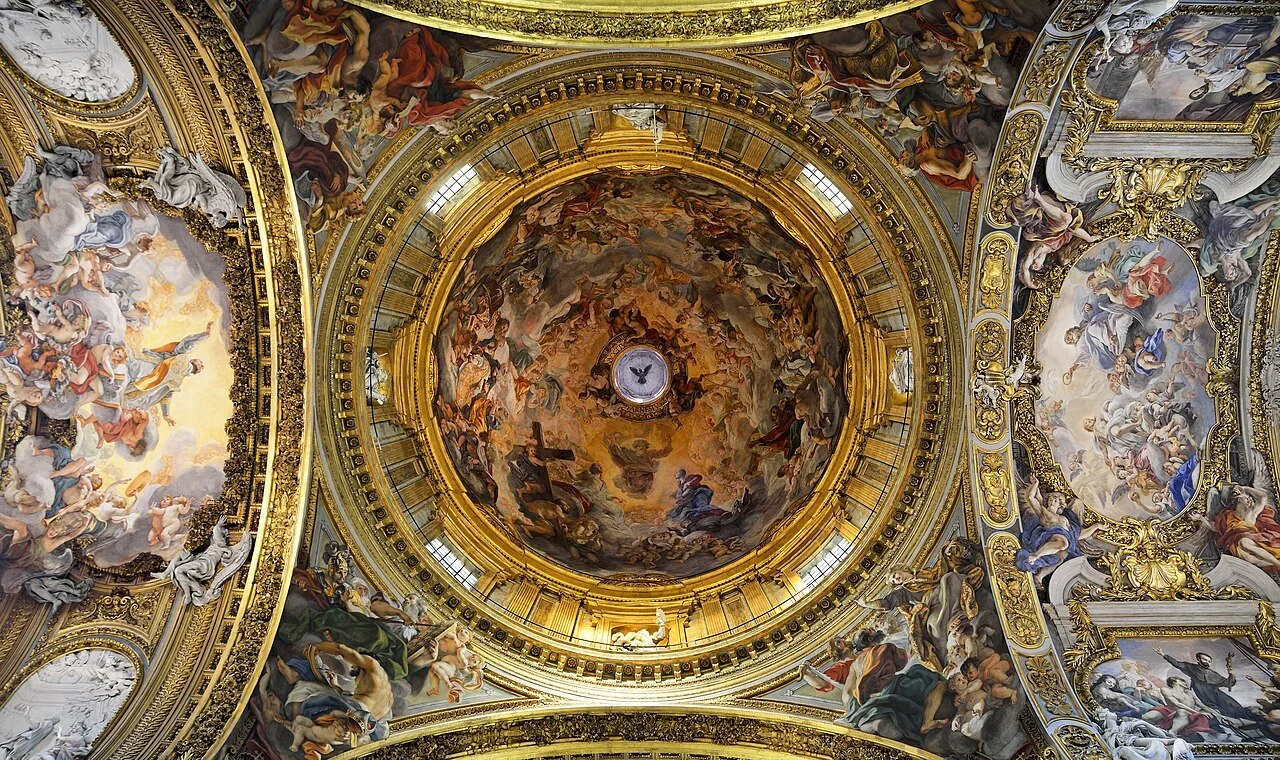
Interior view of dome of the Church of the Gesù by Giacomo Barozzi da Vignola, and Giacomo della Porta
The World During the Baroque Era
The Baroque period began around 1600 and lasted until about 1750. During this time, Europe experienced major changes in science, politics, religion, and the arts.
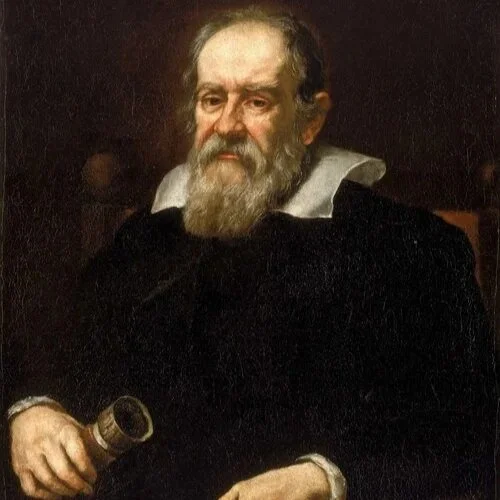
Scientists such as Galileo and Newton changed the way people understood the natural world. In art and architecture, artists created dramatic works filled with movement, detail, and contrast. These same ideas can be heard in Baroque music.
Music was an important part of life at churches and cathedrals, royal courts, and wealthy homes. Composers often worked for a church or a royal court and wrote music for specific occasions. Public concerts also became more common toward the end of the period.
How did the world influence music?
Much of Baroque music was supported by churches, kings and other rulers, and wealthy families. Composers were often employed by these patrons and were expected to write music for worship, celebrations, ceremonies, and entertainment.
New and improved instruments also influenced music. The violin family became especially important, and instruments such as the harpsichord and organ were widely used.
Baroque artists were interested in creating strong emotions and dramatic contrasts. Composers used music to express feelings such as joy, sadness, excitement, and triumph. This helped make Baroque music energetic, expressive, and sometimes very dramatic.
How Can You Recognize Baroque Music?
Several melodies happening at the same time. Composers often used counterpoint, weaving independent melodies together.
A strong, steady pulse. Rhythms are often regular and may be based on dance rhythms.
Lots of ornamentation. Performers added extra notes and decorations to melodies.
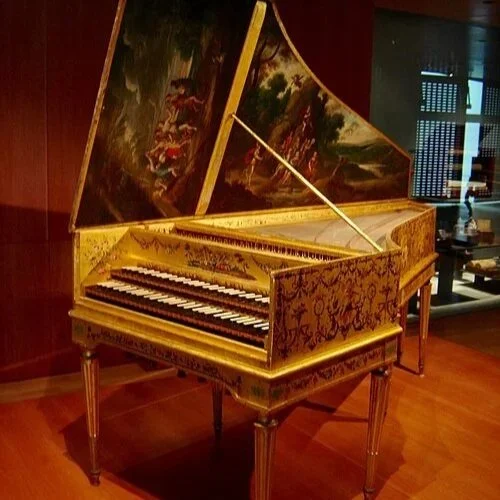
Keyboard instruments such as the harpsichord, organ, and clavichord. The piano was invented during the Baroque period, but it did not become widely used until later.
Vocabulary
Counterpoint – Two or more independent melodies played or sung at the same time.
Basso continuo – A continuous bass line that supports the harmony. It was usually played by a bass instrument and a chord-playing instrument such as a harpsichord or organ.
Ornamentation – Extra notes added to a melody to decorate and embellish it.
Concerto – A work that contrasts a solo instrument or small group with a larger ensemble.
Fugue – A composition in which a musical idea is introduced and then imitated by other voices.
Suite – A group of contrasting pieces, often based on different dances.
Harpsichord – A keyboard instrument that produces sound by plucking its strings.
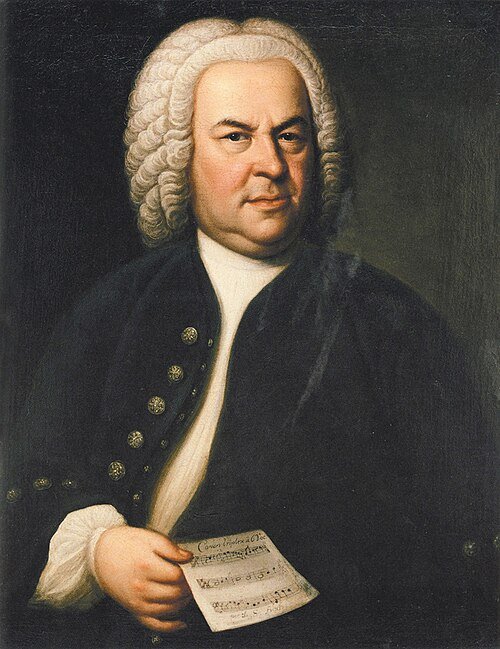
Johann Sebastian Bach (1685-1750)
Johann Sebastian Bach was one of the most prolific composers of the Baroque period, writing hundreds of works for the church, keyboard, orchestra, and other instruments. He came from a large German family of musicians and became a renowned organist, known for his extraordinary skill and ability to improvise.
Bach had a strong work ethic and often had to produce new music on a regular schedule for church services and other occasions. In 1717, Bach accepted a new position in another city, but his employer in Weimar refused to let him leave and had him arrested for nearly four weeks. Even while inprisoned, Bach continued working on his music.
Bach's music is admired for its intricate counterpoint, expressive melodies, and remarkable craftsmanship, and he is now considered one of the greatest composers in Western music.
“I was obliged to be industrious; whoever is equally industrious will succeed equally well.”
“Invention No. 8 in F Major, BWV 779” by J.S. Bach and performed by Nikolai Vajic Johansen
“Brandenburg Concerto No. 3 in G Major BWV 1048” by J.S. Bach performed by the Netherlands Bach Society
did you know?
BWV stands for Bach-Werke-Verzeichnis, German for “Catalogue of Bach’s Works.”
A BWV number is the catalog number assigned to a composition by Johann Sebastian Bach. For example, Prelude in C Major, BWV 846 means that the piece is number 846 in the catalog of Bach's works.
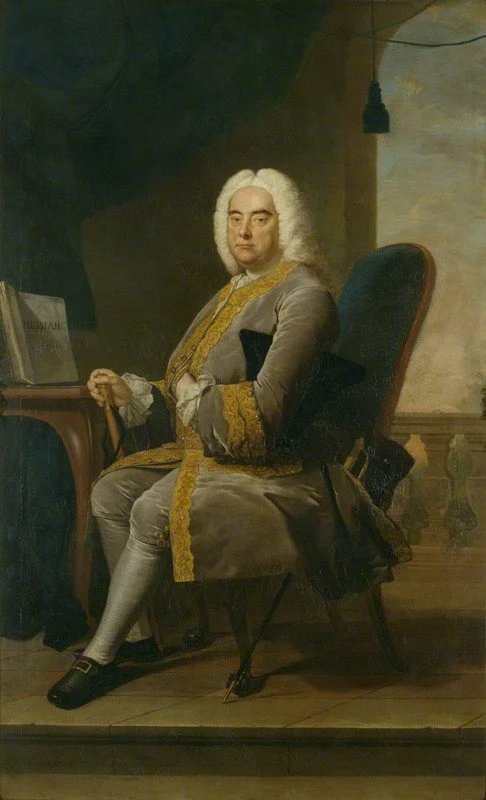
George Frideric Handel
(1685-1759)
George Frideric Handel was a German-born composer who became one of the most successful musicians in England. Unlike Bach, who spent much of his career writing for churches and courts, Handel became famous for opera and oratorio, writing music for large public audiences. He was a talented keyboard player and composer with a bold, passionate personality, and he was known for his strong opinions and determination.
As a young man in Hamburg, Handel became involved in a heated argument with fellow musician Johann Mattheson over who should play the harpsichord during a performance, and the disagreement led to a sword duel; Handel narrowly escaped injury when Mattheson's sword struck a metal button on his coat. The two men soon reconciled and even had dinner together that same month, showing that their friendship survived this hot-tempered disagreement.
Handel later became a successful and wealthy composer in London, where he enjoyed a lively social life and wrote some of the most famous music of the Baroque period, including Messiah, Water Music, and Music for the Royal Fireworks.
“I should be sorry if I only entertained them; I wish to make them better.”
“The Harmonious Blacksmith” by G.F. Handel played by Katarzyna Kowalik on harpsichord
Did you know?
An opera is a dramatic story that is sung and accompanied by instruments. Opera usually includes acting, costumes, scenery, and stage sets. The story can be about historical events, mythology, romance, or everyday life.
An oratorio is also a dramatic story that is sung and accompanied by instruments, but is usually performed without costumes, acting, or scenery. Oratorios often tell stories from the Bible or other religious subjects. Like an opera, an oratorio may include solo singers, a chorus, and an orchestra.